Golfweek Features Jerry Pate Design and Teeth of the Dog - Read More

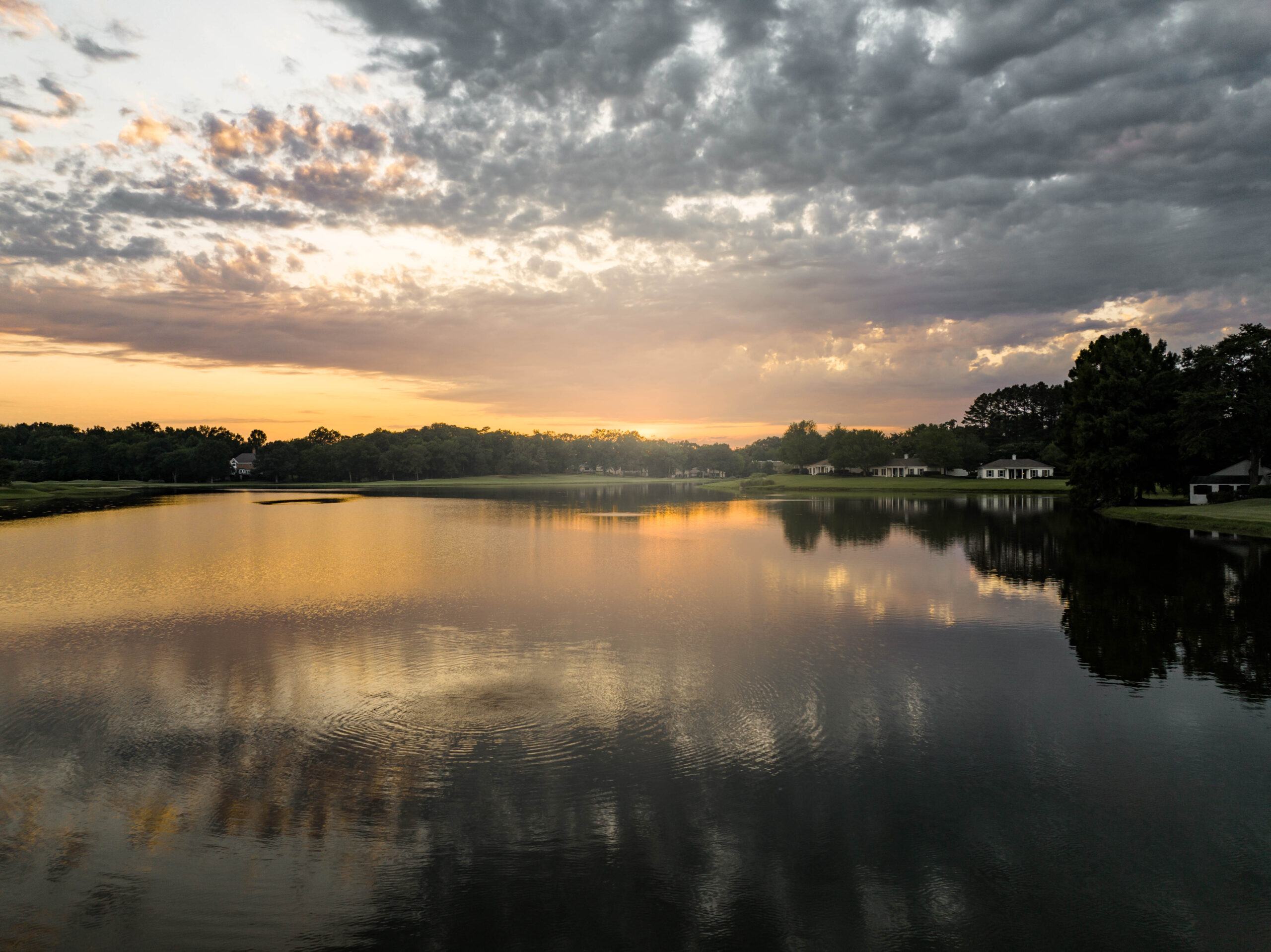
Shown in the cover photo is the Old Waverly Golf Club course, one of Jerry Pate Design’s projects.
We’ve touched on the aspect of sustainability goals, both for the golf course and in commercial landscaping. Designing the golf course as a natural stormwater retention solution is an excellent opportunity to promote sustainability through reduced water consumption. The benefits are numerous, both for the course and for the surrounding community.
Too Dry or Too Wet
We live in an era of changing weather patterns that have made turf care more challenging. A 2024 report by the Environmental Protection Agency (EPA) noted that up to 70 percent of the U.S. experienced abnormally dry conditions periodically over the past decade. Conversely, extreme single-day precipitation events have also become more commonplace. Annual precipitation totals have also been abnormally high for much of the country. The idea of saving excess rainfall for when it’s needed is not a new idea, but deserves extra attention in golf course design.

Saving it for Later
Saving rainwater for later by designing the golf course as a natural stormwater retention solution is complex on a large scale. Simple rain barrels are a great solution for the home garden. Upscaling that idea to the hundreds of thousands of gallons per day that an average golf course consumes is a difficult task.
Underground cisterns are a possibility, but an expensive one that can be difficult to implement. Swales and ponds are a much better answer and are particularly well suited for golf courses. Not only do they capture and retain rainwater, but they also make interesting hazards and create habitats for wildlife.
Bioswales in particular provide a number of benefits when it comes to capturing and controlling stormwater runoff. In modern course architecture, bioswales are a powerful tool for marrying hydrology with aesthetics. While standard swales have always been essential for grading, bioswales elevate the concept. By integrating native grasses, sedges and trees into the depression, we don’t just move water; we filter it. This turns a purely functional drainage feature into a naturalized hazard that frames the hole and adds visual texture to the course routing.
The natural filtering helps to remove debris and contaminants before the runoff reaches the storage location. Bioswales are relatively easy to implement and typically require less maintenance than a storm drain alternative. The vegetation requires little maintenance since it receives ample water and nutrition from the runoff.
Water Storage
Ponds and lakes serve as interesting hazards, but also function well as stormwater runoff storage. Well-designed ponds easily retain heavy precipitation for later use. Like bioswales, retention ponds are lined with grass and vegetation to help filter the runoff water. Pond liners can help to ensure water quality as well. Water can be made to flow through multiple ponds for increased natural filtering.

Riparian Buffers
The vegetation on the banks of streams, lakes and bioswales on the course is known as a riparian buffer. These buffers are one of the best ways to help protect the quality of surface water. Buffer strips of vegetation along the edges filter nutrients, sediments, pesticides and pollutants before they reach the reservoir. Riparian buffers also minimize erosion, keeping the landscape looking better and the water cleaner.
Underground Storage
Where weather events create more water than can be stored in ponds, underground cisterns may make sense. Storing stormwater underground also reduces evaporation and loss from seepage. Ideally, water stored in cisterns will have already been filtered through swales and ponds.
Many Benefits
Using bioswales and retention ponds to capture runoff pays a number of dividends. They help to capture and clean water that would otherwise pose a pooling problem on parking lots or roadways. No one likes soggy greens, and effective water management also helps to clear water from the course.
The benefit is not limited to the golf course, either. Channeling runoff can have a positive impact on adjacent communities that would otherwise be prone to flooding. A series of swales and retention ponds can also help to slow the flow of water in an extreme precipitation event, lessening its destructive power.
The filtering aspect of bioswales, retention ponds and riparian buffers also helps to contain a potential negative aspect associated with golf courses. Fertilizer is an important part of the care that goes into maintaining beautiful turfgrass. Extensive sand caps and topdressing can result in increased mobility of fertilizer nutrients. Unfortunately, that fertilizer can cause problems when it reaches natural waterways. Natural filtration helps to capture that fertilizer before it makes its way downstream.
Irrigating With Reclaimed Water
Of course, the biggest benefit of retaining a lot of runoff is that the water can then be used to irrigate the course in drier times. Designing the golf course as a natural stormwater retention solution means that retained stormwater can provide much of the irrigation that a golf course needs without the negative impact of drawing it from the public water supply.
Rainwater is also better for turfgrass and plants than municipal water. It typically has a more neutral pH than tap water and contains trace amounts of nitrogen and other nutrients that turfgrasses can readily absorb. Municipal water, on the other hand, usually contains higher levels of salt, calcium, magnesium, fluoride and chlorine that can be harmful to the grass and the supporting biome over time. Rainwater will also likely be at an ideal temperature for plant roots compared to municipal water.
A Win-Win Proposition
Transforming a golf course into a functional stormwater asset is a strategic win in course design. By designing the golf course as a natural stormwater retention solution, we achieve multiple critical objectives. We maintain firm and fast playing conditions, significantly lower irrigation expenditures through water harvesting, and protect adjacent real estate from runoff.
Whether we are master planning a greenfield project or creating a renovation for an existing club, this approach serves the golfer, the superintendent, and the watershed alike. Reach out to the team at Jerry Pate Design to discuss how we can integrate these hydrological solutions into your design.
