Golfweek Features Jerry Pate Design and Teeth of the Dog - Read More


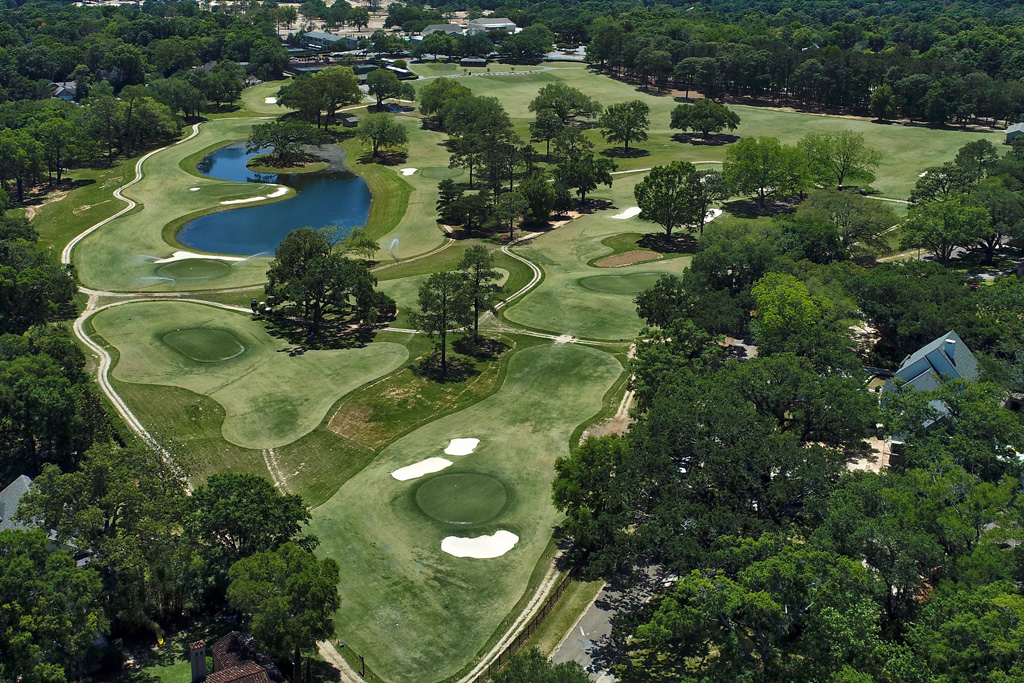
Shown in the cover photo is the Old Waverly Golf Club course, one of Jerry Pate Design’s projects.
Golf course cart paths are often viewed as simply a way of getting players from point A to point B. However, the design of these pathways involves a complex balancing act between efficiency, aesthetics, safety, and environmental stewardship. Designing cart paths for a seamless player experience requires a thoughtful approach that considers everything from routing and material selection to drainage and player amenities.
By thinking about more than just the most direct line and considering the player’s full journey, course designers and managers ensure that the cart path enhances, rather than detracts from, the overall golf experience. Cart paths may not have been part of our recent discussion on what determines the appeal of a golf course, but they do play an important supporting role.
Routing and Flow
The primary function of the cart path is to get the player from one hole to the next. It is essential that paths connect greens and tees efficiently. They should avoid unnecessary detours that increase round time and player frustration. Minimizing walking distance is the primary goal when designing cart paths for a seamless player experience.
With that said, we need to acknowledge that there is more to it than simply finding the quickest route. Sight lines are an important consideration. Cart paths should not detract from primary viewing angles from tee boxes, fairways and greens. Ideally, they will be routed through natural depressions, tree lines and behind bunkers or hills to avoid spoiling the view.
Cart paths also need to be designed to maintain great playing conditions by minimizing traffic on the center of the fairway. Crossing fairways or roughs at a 90-degree angle makes it more likely that golfers will leave the path when close to their ball and then return to it after their shot. This eliminates the soil compaction, turf damage and ruts that result from a high percentage of carts travelling down the center of the fairway.
Avoiding high-traffic areas such as landing areas and green approaches is another requirement. Paths located in these areas can lead to unnecessary distraction and potential injury. Terminating the path at the furthest point from the green entrance encourages players to park and walk the last 50-100 yards, preserving the natural green surround. Paths should be within 10-15 feet from the nearest tee marker, though, and routed to allow players to walk forward onto the tee surface.
Material Selection
Material selection is another important aspect of designing cart paths for a seamless player experience. Maintenance requirements, noise and safety are objective considerations in choosing the material for cart paths. Aesthetic considerations must be balanced with these concerns, as the paths will be an inherent part of the look and feel of the course.
Concrete is the most common material simply due to its durability and low maintenance requirements. The downside is that concrete paths can be noisy and visually intrusive. Colored or stamped concrete becomes a little more expensive, but can go a long way toward blending with the landscape and course design.
Although not as durable as concrete, asphalt is another good choice. It does require a little more maintenance, but is generally quieter. The darker color blends in better, particularly in shaded areas.
For the most aesthetically pleasing material, decomposed gravel or granite is hard to beat. Particularly on rustic courses, this material is able to blend in perfectly. Of course, this material is much higher maintenance, requiring regular regrading to keep it looking its best. Excellent drainage is required to avoid soft spots or washouts. Pavers and cobblestones are great-looking options, but are typically only used near clubhouses and other buildings due to cost.

Safety and Functionality
Beyond look and feel, functionality and safety must be part of the equation when designing cart paths for a seamless player experience. Paths must be intuitive, safe and comfortable to drive on. The path between tee and green should be easy to traverse.
There are some rules of thumb regarding dimensions and geometry for cart paths. A standard width is 8 feet, but may be reduced to 6 feet in visually sensitive or constrained areas such as wooded corridors. A minimum of 1 foot of compacted rough or stabilized grass makes for forgiving edges and also helps to ease runoff concerns. A maximum grade of 15-20% reduces cart rollover risk and excessive mechanical wear on the equipment.
Signage on a cart path should be kept to a minimum and should be designed to blend in with the scenery as much as possible. Notable exceptions are extremely hazardous spots and any areas where carts must keep to the path. Low walls or bullards should be enough to route traffic through complicated intersections.
Don’t forget, cart paths are also used and routed for maintenance vehicles and access. Consideration must also be given to the flow of those operations as well.
Maintenance and Environmental Considerations
Drainage is an important consideration during cart path construction. There should be a slight cross-slope of 1-2% to direct water off the surface and prevent pooling. Areas that have a lot of runoff should utilize swales to filter sediment from runoff before it reaches streams or ponds. Check dams or speed bumps may be needed on steep slopes to slow water flowing down the path.
The roots of mature trees should be given special consideration when designing cart paths for a seamless player experience. Routing a path over roots is a recipe for broken concrete in years to come and doesn’t do the tree any good, either. Ideally, paths should weave around root zones. Where this is not possible, a boardwalk or bridging structure may be needed.
Wetlands and waterways should also get special treatment. Low impact bridges or culverts should be used to provide safe passage for carts without negative environmental impact. Permeable materials should be used where possible to avoid damage from high volume runoff.
Player Amenities
Ball washers and trash receptacles are necessary elements along the cart path. Attention must be paid to placement so that they are easily accessible but not obtrusive. Once again, materials and composition should be visually appealing and compliment the course design. Rest stops with shaded benches at pleasant viewing points are another nice addition to the path.
Design Matters
Designing cart paths for a seamless player experience goes well beyond paving a direct route from tee to green. While players may take the functionality for granted, the aesthetics of the cart path design play an important part in the overall perception of the course. A poorly implemented path can easily detract from the look of a course, where a well designed path can complement it.
At Jerry Pate Design, we take pride in attention to detail. The cart path is one of those details that may not be as notable as the shape of a green or placement of a bunker, but the design does matter. We’re here to make sure even the utilitarian details are designed with passion.
