Golfweek Features Jerry Pate Design and Teeth of the Dog - Read More


Sustainable landscape materials are defined by their ability to reduce environmental impact through low-energy production, local sourcing, durability, and renewability. They promote ecosystem health, conserve water, minimize waste through recycling (like reclaimed wood or crushed stone), and support biodiversity by using native, organic, or rapidly renewable materials.
Sustainable landscape materials must also be economically viable to help ensure their adoption. An important requirement of sustainable landscape materials is that they are resilient and require less maintenance to keep things looking good. That in turn results in lower cost over time.

The LCA Approach
The sustainability of landscape materials can be determined through a process known as Life Cycle Assessment (LCA). Based upon the standards set forth in ISO 14040/44, LCA assesses a product’s environmental impacts from “cradle-to-grave” (extraction to disposal) or “cradle-to-cradle” (recycling).
For sustainable landscape materials, an LCA assessment considers the environmental impact of:
- Raw Material Acquisition: The extraction of natural resources or the resources consumed to make recycled content.
- Manufacturing & Processing: Production of the final product, such as pavers, synthetic turf, or organic soil amendments.
- Transportation: Shipping materials to the site, which often contributes to the overall carbon footprint.
- Installation & Use: Environmental impact during construction and ongoing maintenance.
- End-of-Life: Disposal, recycling, or composting of materials.
The overall goal of the LCA approach is to create as much of a closed-loop landscape as possible. The approach reduces the environmental impact of landscape materials, but also saves costs in the long term. Products are not nearly as environmentally friendly or economical if they need to be replaced often. Analyzing the whole life cycle helps us to make the best choices.
Categories of Sustainable Landscape Materials
Sustainability is a consideration in all of the materials used in the landscape, from paths to plant beds. For some, the resources used in manufacturing is the most important consideration. For others, upkeep or ecological interaction may be more important.
Paths and Paving
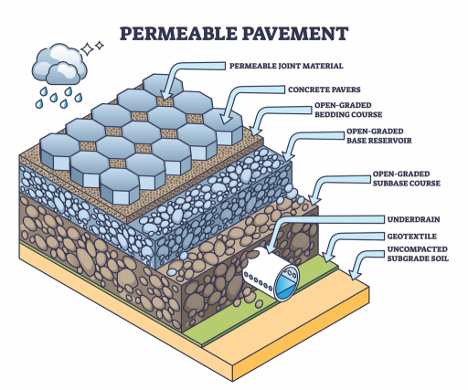
A major sustainability consideration in selection of paving materials is the effect they have on groundwater flow. Permeable paving systems allow rainfall to naturally recharge groundwater rather than having it simply roll off a concrete surface. This not only improves the soil condition, but reduces the effects of erosion from runoff.
The materials used for pathways should also be taken into account. Reclaimed stone and bricks avoid the high carbon cost of quarrying new materials. They are also long-lasting and require little maintenance, making them a cost-effective option.
Decomposed granite is a highly versatile and popular choice for everything from pathways to driveways. Solid quarry rock and waste materials are crushed, screened, and blended to mimic the composition of naturally broken-down granite, effectively recycling stone waste. Recycled porcelain, copper slag, or other crushed materials may also be used to create alternatives that mimic the properties of decomposed granite. Local alternatives such as crushed shells are a regional option. Compacted and stabilized decomposed granite creates a more solid surface than gravel that is still permeable. Maintenance is relatively low, as well.

Retaining Walls and Borders
There are a number of popular choices for creating retaining walls and borders with sustainability in mind. Rammed earth retaining walls are perhaps the most sustainable choice. They are highly effective and durable, lasting well over 100 years. The drawback is that they are labor-intensive and require precise engineering for proper drainage.
Gabion walls using locally sourced rocks encased in wire mesh are highly effective and durable, but may be a little too utilitarian for the typical landscape. Fallen timber and wattle fencing using found wood is an excellent biodegradable option, although with a higher long-term maintenance requirement.
Recycled plastic lumber is an excellent, highly durable choice for retaining walls, offering superior longevity to wood by being rot-proof, moisture-resistant, and impervious to insects. It handles heavy soil loads well, requires minimal maintenance, and lasts for decades. These materials are eco-friendly, often made from 100% recycled plastic, and do not require staining or sealing.
Containers and Raised Beds
Choosing sustainable landscape materials for potting and plant containers is relatively simple. Avoiding fossil-fuel based plastics is the main objective. Thankfully, there are lots of durable, natural, and biodegradable options available. Materials like terracotta, ceramic, wood, bamboo, and metal make attractive planters that benefit the environment, too. Rice hull and coconut coir pots are a biodegradable option for seasonal planting. Household items like jars, cans, and crates can be upcycled as well.
Turning trash into treasure can make a landscape interesting and attractive. There are lots of old galvanized troughs, old wooden crates and stone basins lying around that work perfectly as planters. The recycled plastic lumber we mentioned above is great for raised beds, too.
Edging and Fabrics
Defining borders of plant beds and suppressing weeds is another area where fossil-fuel based plastics and toxic coatings can be easily avoided. Repurposed bricks, wood, and stone make great edging. Cor-Ten or weathered steel is another attractive and long-lasting option with its uniform rusted and weathered appearance.
Weed barrier fabric and mulch both suppress weeds and help soil to retain moisture. Plastic fabric that will eventually break down into chemicals harmful to the environment should be avoided. Jute and burlap are great alternatives and even recycled cardboard can be used. Arborist wood chips, pine straw and leafmold are great ways to ensure that mulch is completely organic. Hemp or sisal twine can be used instead of plastic ties for plant staking and training.
The 100-Mile Rule
The 100-mile rule is a cornerstone of sustainable landscape architecture, centered on the principle of reducing the total energy consumed by the extraction, processing, and transportation of materials. By sourcing heavy elements like stone, gravel, and bulk mulch from within a 100-mile radius, we drastically lower the carbon footprint associated with long-haul trucking and fuel consumption.
Beyond the environmental benefits, this constraint forces a deeper connection to the regional vernacular. Using local granite or native timber ensures that the built environment feels grounded and cohesive with the surrounding natural geology. It also bolsters the local economy and ensures that the materials are biologically and climatically suited for the site, as local plants and soils have already adapted to the specific pathogens and weather patterns of the area.
The Long View
At Jerry Pate Design, our professionals understand that sustainable landscape materials are an important element in creating stunning landscapes that are in harmony with the environment. From permeable pathways to garden edging, the focus is always on using natural or recycled materials wherever possible. Let us show you how beauty and sustainability go hand in hand.
