Golfweek Features Jerry Pate Design and Teeth of the Dog - Read More

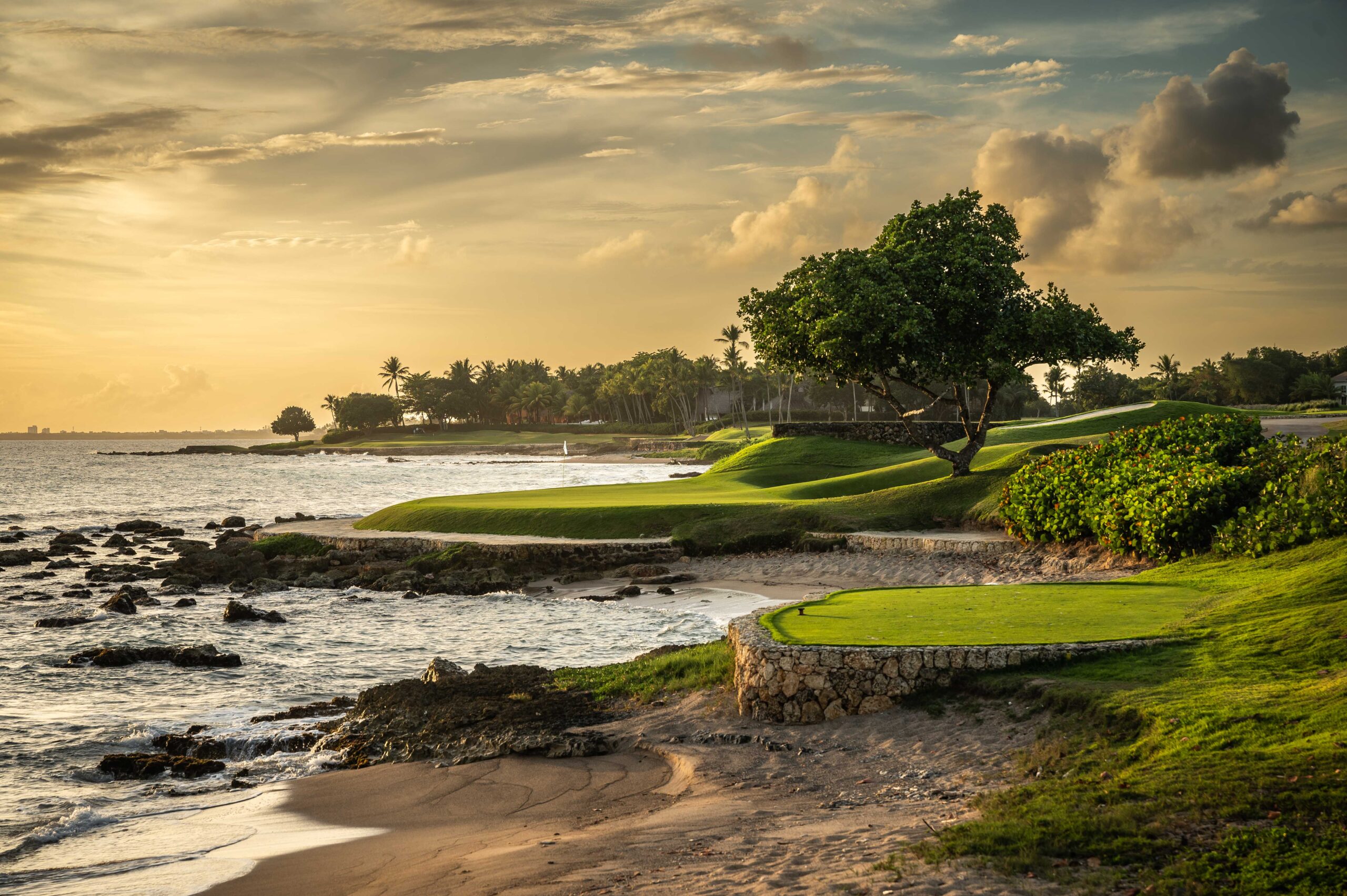
Casa de Campo’s Teeth of the Dog has been a bucket list golf course since its debut in 1971. Pete Dye’s genius for exceptional golf course design is evident on every hole and the course continues to draw players from around the world. Weather and decades of continuous play eventually took their toll on a course, though, and a restoration of Teeth of the Dog was overdue by 2024.
An Aging Icon
Creating agronomic conditions that allow for optimal turfgrass quality was the initial catalyst for the restoration of Teeth of the Dog. The course was built largely on a bed of coralina stone, and due to its early and rugged beginnings, only had an inch or so of heavy soil at best in which to grow turfgrass. This made it very difficult to create consistently world-class playing conditions. Further, greens had gradually become smaller and tees uneven. The ever-present wind off the water had eroded Dye’s signature bunkers.
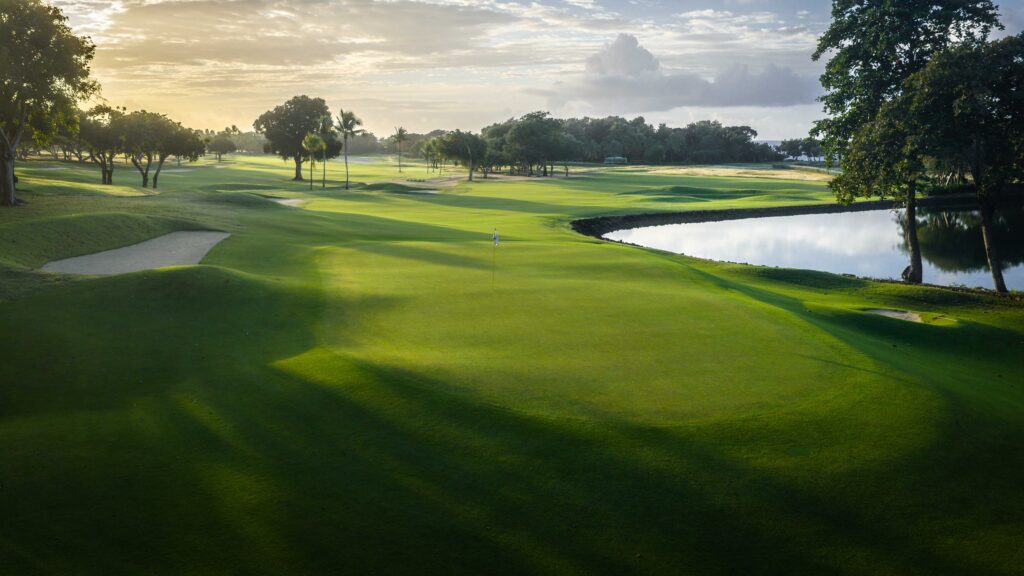
Teeth of the Dog was beginning to feel a little tired and players had begun to notice. Playing conditions were inconsistent on the uneven turf. Maintaining firm conditions was impossible in the shallow heavy soils. Roll-out was nonexistent on areas of soft ground. Bunker floors had weathered into pits of hard pan that were difficult to play out of. Even cart paths had deteriorated to the point that they were detracting from the experience. The erosion of the iconic course made restoration of Teeth of the Dog a top priority for the Casa de Campo resort.
Part of a Larger Vision
The restoration of Teeth of the Dog was not an isolated project. It was a key component of a broader, multi-year effort to elevate Casa de Campo to a new five-star standard across the entire resort. Significant investments have been made in recent years, including renovated guest rooms, new luxury suite accommodations, a reimagined beach club with expanded dining and recreation amenities and the addition of a world-class spa experience.
As international tourism and destination golf offerings throughout the Caribbean have become increasingly competitive, Casa de Campo recognized the need to ensure its flagship course reflected the same level of quality and luxury found throughout the rest of the property. Restoring Teeth of the Dog was essential not only to preserve its legacy, but also to reinforce the resort’s position as one of the world’s premier golf destinations.
Planning the Project
What started as a discussion of resurfacing tees, fairways and greens quickly expanded into a plan for a complete restoration of the course. It was critical that refreshing and in some cases modernizing the course did not detract from the character instilled in the course by Pete Dye. Jerry Pate had been retained years earlier to suggest modifications to the course, but was respectful not to alter any of Pete Dye’s artistry. Jerry Pate Design was the obvious choice to lead the restoration of the course.
As planning progressed toward a 2025 project start, the team at Jerry Pate Design focused on the goal of updating the course while keeping Dye’s design intentions and style intact. In some areas they would need to refer to old photos to recreate the original design. Behind every decision was the desire to improve, yet adhere as closely as possible to the Dye design. As Jerry Pate put it, “It’s like renovating a house. We’re putting down new carpet, new wallpaper, new faucets and maybe new doors. But it’s still the same house.”
Improving Playing Conditions
Improving playing conditions is what started the project discussion and has made the biggest improvement in both presentation and playability. The entire course was stripped and replanted with Pure Dynasty Paspalum, a high-performance grass specifically designed for warm climates and salt air. All fairways and greens were sand-capped prior to seeding to correct the clay soil issues and provide better drainage. Adding a few inches on fairways and up to eight inches on greens required 4,487 cubic meters of sand.
Restoring Greens
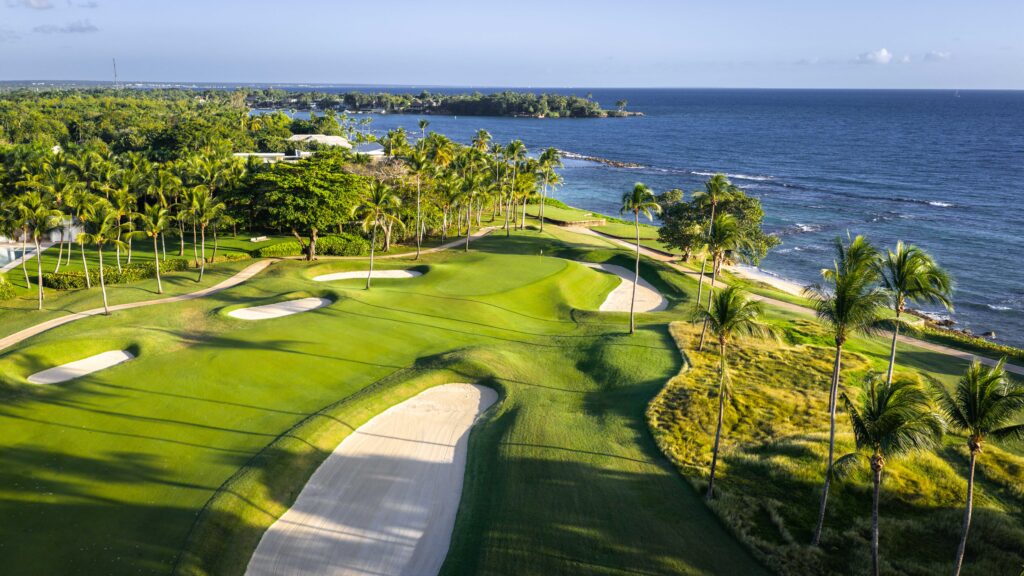
Great care was taken during the restoration of Teeth of the Dog to not only improve the surfaces of the greens, but to bring them back to Dye’s design intent. As with most courses, the greens at Teeth of the Dog had shrunken over the years. In the case of hole number 2, an entire section of the green had been lost to time and was restored by referring to old photos. Greens were also recontoured to bring them closer to their original form.
Also, the green on the exceptional hole number 8 was enlarged, based on historic photographs, to allow balls to better funnel onto the putting surface at the water’s edge. Pate also created a restored version of the 15th green. The updates accurately reflect the subtle nature of the original greens, but with the benefit of added pin placements for more varied player experiences.
Renewing Bunkers
The seaside climate of Teeth of the Dog had taken a major toll on the course’s impressive bunkers. Decades of wind had caused the sand to shift and the bunker edges to lose their “Pete Dye character.” Many bunkers had become lopsided or worn down, losing the sharp, dramatic edges they had in 1971. The sand had also mixed with the underlying clay, making for poor playing surfaces.
The course’s 127 bunkers were completely renovated with new liners and drainage systems. Modern drainage technology will help them retain their shape and playability for years to come. Sand trucked in from the mountains north of the capital of Santo Domingo has made the bunkers beautiful and enjoyable to play once again. Care was taken to create flat bottoms and enhanced faces, ensuring that the bunkers provide the visual framing Pete Dye originally intended.
As with greens, some thoughtful enhancements were made to bunker placement. Some fairway bunkers were relocated or extended because modern professionals could easily drive over them. For example, bunkers on hole 9 were pushed farther out, and those on hole 14 were moved to have a greater influence on the landing zone. Sand surfaces were given a more flattened aspect to provide easier entry exit points for the average golfer, improving the pace of play and safety.
Replacing Tees
Tee boxes were another critical component of the restoration of Teeth of the Dog. Many of the 70 teeing areas had become uneven due to soil settling, heavy wear, and subsequent topdressing. During the project, every one of the 70 tee boxes was rebuilt with drainage and a three-inch sand cap. Approximately 679 cubic meters of sand were used specifically for the tees to ensure a perfectly level and well-draining surface.
In another nod to modern drive distances, some tee boxes were redesigned to create more challenge. Back tees were relocated to lengthen distance to the pin, resulting in an increase in overall course length to 7,312 yards. On specific holes (like hole number 12), the tees were repositioned to restore the original risk-reward angles that had been lost as players began to take more aggressive lines with modern technology.
Renovating Infrastructure
While much of the restoration of Teeth of the Dog was focused on playability and aesthetics, the functional aspect was not overlooked. In all, 4,487 cubic meters of concrete were used to renovate cart paths that had begun to detract from the experience. Seven new stone retaining walls were also constructed to protect the course from ocean erosion and to help ensure the longevity of spectacular oceanside play.
Designing for Sustainability and Resilience
Long-term sustainability was a central consideration throughout the restoration of Teeth of the Dog. Water management, in particular, has become increasingly important as the Casa de Campo community continues to grow. The course’s new irrigation system features modern central control technology and high-efficiency heads, allowing the agronomic team to deliver water with greater precision and significantly reduce waste.
The selection of Pure Dynasty Paspalum also supports the resort’s long-range environmental goals. Because the turf performs well with saline water, the course is positioned for potential future use of desalinated seawater for irrigation—an important step toward conserving freshwater resources for the broader community.
Given the course’s dramatic coastal setting, protecting it from the effects of storms and wave action was equally critical. Coastal engineering measures were implemented in vulnerable areas, including strategic shoreline reinforcement and elevation adjustments to select greens, tees and bunkers. These improvements help safeguard the course against storm surge and erosion, ensuring that its most iconic seaside holes remain intact for decades to come.
A Measurable Impact
The success of the restoration has been evident not only in improved course conditions, but also in guest response and overall performance. In the months following the reopening, rounds played increased significantly, while the average rate per round rose by more than fifty percent. The renewed appeal of Teeth of the Dog has also driven increased golf activity across the resort, along with record retail performance and stronger overall occupancy and revenue.
These early results confirm what the project set out to accomplish: reestablish Teeth of the Dog as a must-play global destination and strengthen Casa de Campo’s position in the competitive luxury golf and tourism market.
Preserving the Legacy
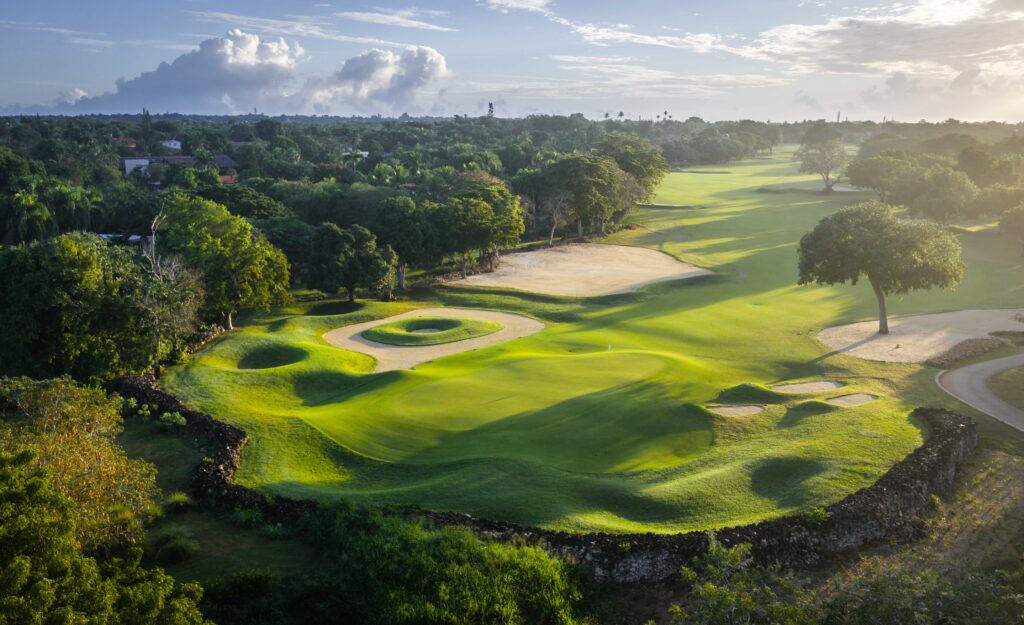
More than 500,000 man-hours of work went into the year-long restoration of Teeth of the Dog led by Jerry Pate. The course is not just a highlight of the Casa de Campo Resort, but an enduring testament to Pete Dye’s artistry. Every portion of the project was undertaken with an eye on keeping that legacy intact.
Completed in December 2025, the restoration of Teeth of the Dog has achieved the goals of improving playability and aesthetics while retaining the charm of the iconic course. The player experience is enhanced, modern expectations are met and historical features have been retained. It is satisfying to know that the restoration of Teeth of the Dog has successfully revitalized the best course in the Caribbean to a state that would make Pete Dye proud.
To receive updates about other golf projects, be sure to join our email list via the form at the bottom on our homepage.
