Golfweek Features Jerry Pate Design and Teeth of the Dog - Read More


Shown in the cover photo is the Teeth of the Dog at Casa de Campo, one of Jerry Pate Design’s projects.
The challenge of the game of golf is inextricably linked to the design and condition of the course it is played on. The best courses in the world are designed to test the skill of elite tournament players and subsequently attract amateur players who want to experience the same level of challenge. Reaching this level of recognition is difficult and there is more to crafting a championship-caliber golf course than you might think.
What Determines Championship-Caliber?
We can make a list of PGA tour venues, but what makes a championship-caliber course? An obvious differentiator is length. Elite courses are typically 7,000 to 7,500 yards in length, or over 1,000 yards longer than a typical municipal course.
Comparing length to an average course is one measure, but crafting a championship-caliber golf course involves attention to many other elements. Additional tees accommodate the longest hitters. Fairways are narrower and roughs are denser. Greens are larger with more complex and subtle undulations. Hazard placement demands more strategy and accurate execution. In short, crafting a championship-caliber golf course focuses on maximizing the challenge and the experience.
Strategy and Difficulty
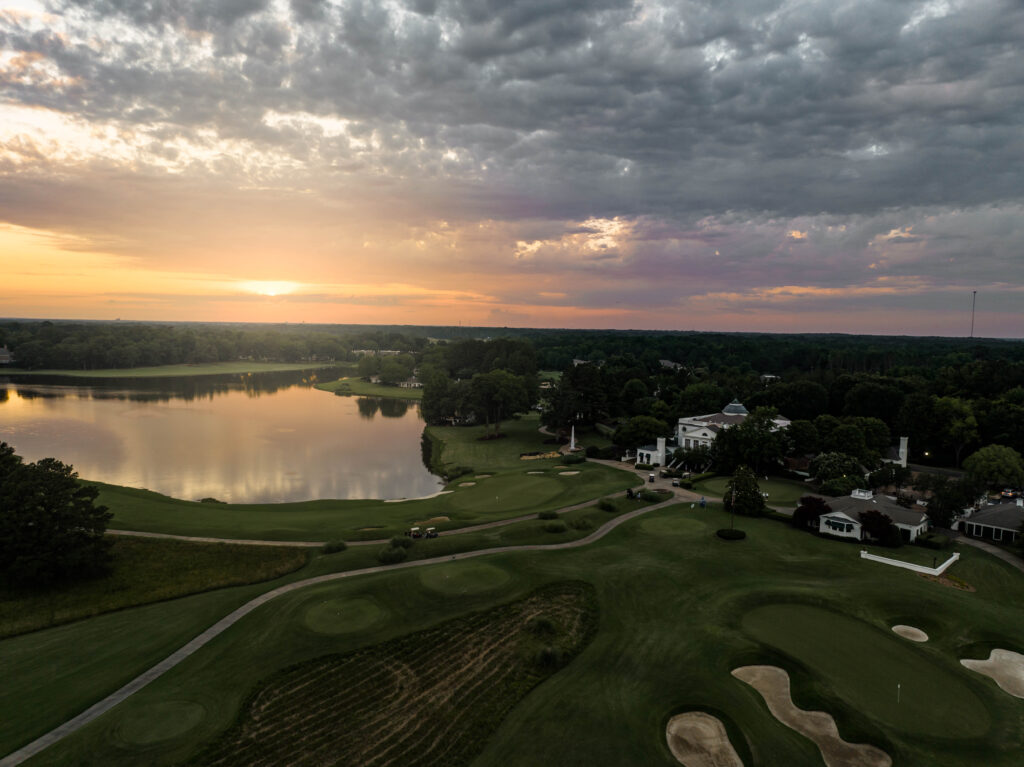
Championship-caliber golf courses often incorporate architecture based on the heroic school of thought in golf course design. The design philosophy features dramatic risk-reward scenarios involving water, bunkers and other hazards. Significant rewards are offered for the successful carry, but a near miss is heavily penalized.
The best hazard design moves beyond simple punishment and focuses on strategic complexity, psychological manipulation, and aesthetic integration into the natural landscape. Elite players are forced to carefully evaluate risk-reward strategies that penalize even slightly offline shots while paying handsome rewards for a bold attempt well executed.
Visual trickery is an oft-used tool in the architect’s tool kit. By oversizing or undersizing bunkers, a player’s depth perception may be tricked, making hazards appear closer or farther away than they actually are. Large bunkers or waste areas placed in key landing areas on par 5s may be used to intimidate players and force them to decide between a high risk direct shot or a safer, longer route.
Asymmetrical challenges are another way to make elite players make difficult strategic decisions. Water or sand hazards placed on a diagonal to the fairway offer multiple shot choices that a player must evaluate. A shorter carry that leads to a more difficult approach shot angle? A longer, riskier carry for a better line to the pin? Crafting a championship-caliber golf course means demanding these types of decisions throughout the course.
Green Complexity
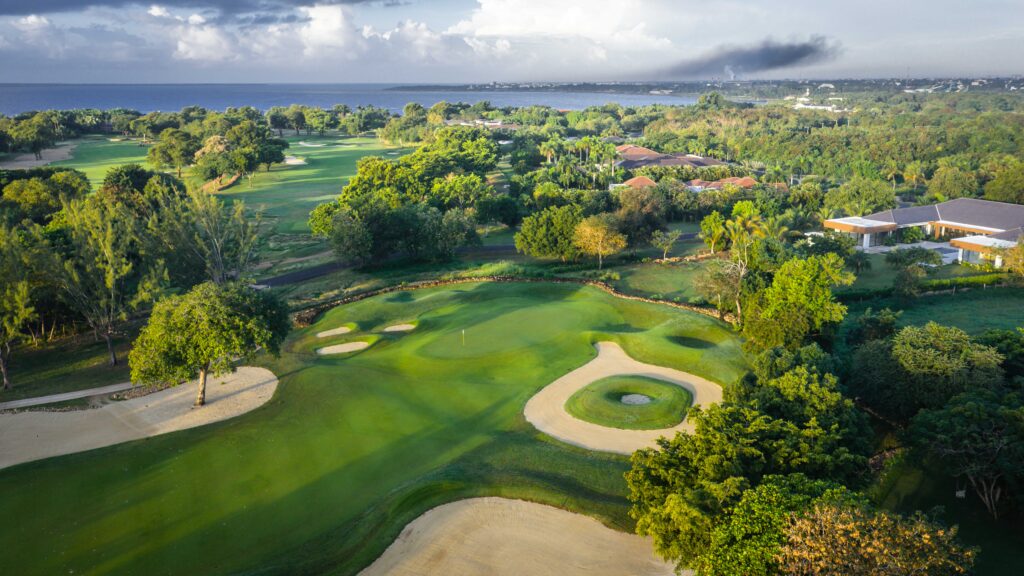
Complex greens are a hallmark of the championship-caliber golf course. Designing these greens is an exercise in defensive architecture. The architect moves away from simple, flat surfaces and toward intricate, multi-tiered landscapes.
On a typical municipal course, the primary goal is playability and maintenance ease, often resulting in push-up greens with gentle back-to-front slopes. In contrast, a championship green utilizes subtle internal contours. Ridges, spines, and swales create distinct pins or quadrants within a single surface. This ensures that a golfer cannot simply aim for the middle of the green; they must navigate the specific topography to prevent their ball from being funneled thirty feet away from the hole into a collection area or deep bunker.
Beyond the visible slopes, the complexity of a championship green is dictated by the green speed and the precision of the subsurface construction. Because these greens are often built to USGA specifications with specialized sand-based profiles, they can be mown to heights that allow for Stimpmeter readings of 12 or higher. At these speeds, a slope of even 2 or 3 degrees becomes a treacherous break that can cause a ball to oscillate or roll off the surface entirely.
Green surfaces are designed with micro-movements, or tiny, nearly invisible undulations that demand a masterclass in green-reading. On a standard course, a missed putt stays close. On a championship green, a misread line can result in a triple-break nightmare that tests a player’s mental fortitude as much as their physical touch.
Complex Design Below the Surface
Designing a championship-caliber course requires a sophisticated marriage of civil engineering and architectural mastery. There is a technical focus on sub-surface infrastructure, specifically high-performance drainage and irrigation. For a course to withstand the rigors of elite play and maintain firm, fast conditions, a tiered drainage system is utilized, often featuring a USGA specified rootzone. This involves a precise 12-inch layer of sand and peat mix over a 4-inch gravel blanket, ensuring a capillary break that prevents waterlogging while maintaining moisture for the turf.
The irrigation system is equally complex, utilizing a high-density polyethylene pipe network and a central control system that allows for individual head control, enabling the agronomy team to manage the moisture levels of specific mounds or swales to within a percentage point of target saturation.
Systems like Sub-Air and Precision-Aire have revolutionized the way the soil profile is managed by providing a dual-action vacuum and pressure mechanism. By physically pulling moisture through the sand-based profile during heavy rain events or pushing oxygen directly to the root zone during periods of stagnation, the risk of anaerobic conditions can effectively be mitigated. This technology essentially allows the system to breathe for the turf, ensuring that even under the stress of changing environmental conditions, the greens remain firm, fast, and biologically resilient.
While sub-surface aeration manages the soil’s breath, the integration of hydroponic principles is redefining how the turf is nourished. Moving beyond traditional granular applications, many elite facilities now utilize sophisticated fertigation and moisture-sensing arrays that mimic hydroponic efficiency, delivering a precise cocktail of nutrients and water directly to the roots without the waste of runoff.
This level of targeted control, once reserved for greenhouses, is now being applied to tees and fairways along with greens to maintain uniform vigor across varying microclimates. By treating the entire playing surface as a managed ecosystem where every variable from soil temperature to nutrient density is calibrated, it is possible to create a consistent, quality playing surface that is championship-ready.
Technological advancements play a part in making irrigation and fertilization more efficient and environmentally conscious, but nature plays a part as well. Championship courses are increasingly designed as closed-loop ecosystems where the landscape’s natural hydrology is preserved or enhanced. The preservation of native vegetative buffers and wetland corridors is prioritized, creating biological filters for runoff. By utilizing best management practices, bioswales and retention basins are engineered to capture 100% of on-site stormwater, allowing it to recharge local aquifers or be recycled through the irrigation system.
Working With Nature Instead of Against It
Beyond engineering, crafting a championship-caliber golf course often represents the pinnacle of creating a course that works with the land. By integrating the course into the existing features of the land rather than forcing a layout upon it, a course feels like an extension of the natural surroundings. This not only provides a stunning visual backdrop for high-stakes competition but ensures the course remains a permanent, positive asset to the local ecology.
The best championship courses leverage natural sightlines to create a psychological frame for every shot, using the existing horizon and landforms to guide, or misguide, the golfer’s eye. Visual deception is created by placing hazards in the direct line of sight to a landing area, even if there is ample room to the side, forcing the player to commit to a specific flight path.
Strategic demands are often achieved through diagonal framing, where a bunker or a ridge runs at an angle to the tee box, forcing a heroic decision. Players must choose how much of the hazard they can successfully carry to gain a better angle for their approach. By aligning these corridors with natural vistas or significant topographical features, the strategic intent of the hole feels like an organic extension of the environment rather than a forced penalty.
Tournament Preparation
Along with the architectural design of a championship-level course, ongoing maintenance and tournament preparation is also important. Above all, a uniformity of turf condition must be created through agronomic preparation. Teeing areas must be mowed at ½” or less and kept on the dry side. Greens need to be cut to 3/16” or less and cut daily for several weeks prior to competition to ensure turf health. During the competition, greens must be cut in two directions every morning.
The outlines of fairways are often altered to place a premium on accuracy for tour play. Grasses are allowed to grow to rough height to effectively narrow fairways. There will usually be an intermediate rough cut to 2 inches immediately adjacent to fairways. All of this modification begins up to 6 months prior to a tournament. Any areas that need strengthening are painstakingly resodded and topdressed to smooth integration with surrounding turf.
Bunkers get extra attention, too. Sand should measure 4 to 6 inches in depth and any additional sand must be added at least a month before the competition. New sand may need to be watered for proper settling.
The Reward of Crafting a Championship-Caliber Golf Course
Every aspect of a great golf course comes into play when a major championship is held. The setting, the conditions and the challenge create a memorable competition for players and spectators alike. From creating a design that works with the land to mowing greens the day tournament play begins, crafting a championship-caliber goes far beyond typical golf course design.
At Jerry Pate Design, we infuse a championship-caliber attitude into everything we do. Contact us to see how our team can elevate your landscape to tournament level beauty.
