Golfweek Features Jerry Pate Design and Teeth of the Dog - Read More

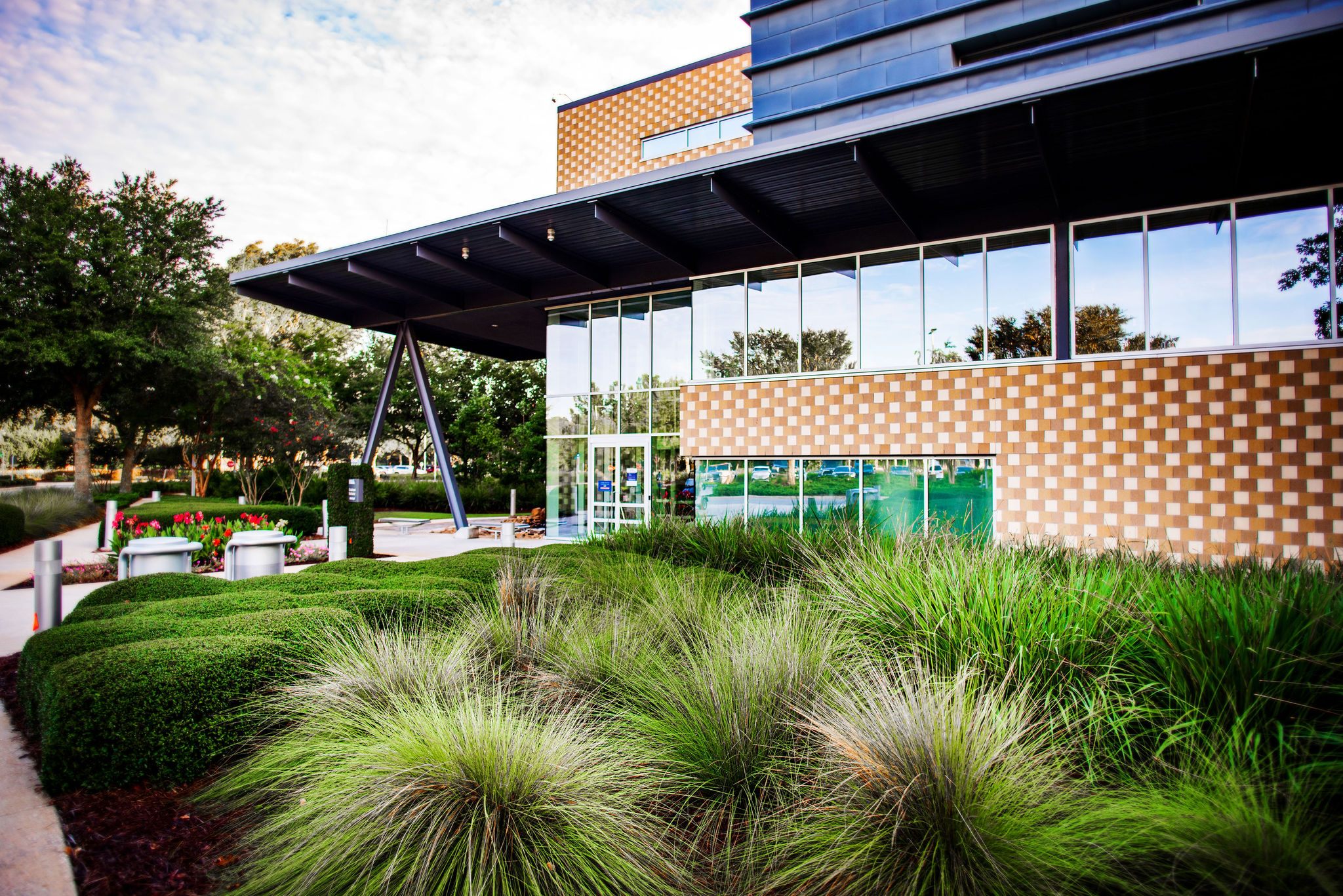
Creating the most beautiful and functional indoor and outdoor spaces involves uniting architecture and landscape architecture to make a cohesive whole. When both disciplines collaborate to blend their unique perspectives and expertise, the outcome is often exceptional. Creating seamless transitions between architecture and landscape connects the inside to the outside and the building to the land.
Unified Vision
When discussing commercial projects, indoors and outdoors should be thought of as one cohesive environment rather than completely separate spaces. Aesthetics, functionality, and quality of life are all improved when the line between the two is softened and a connection between them is strengthened.
There are many principles and techniques involved in creating seamless transitions between architecture and landscape. Perhaps the most important is for landscape and building architects to establish a unified plan and combined vision for a project. While there will certainly be processes and priorities unique to each discipline, they can, and should, be viewed as complementary components of a cohesive whole.
When done well, this collaboration results in a built environment that appears as a natural extension of the landscape and a landscape that feels like a natural extension of the living space. It is a quality that is difficult to define, but enjoyable to experience. Walkways lead the eye toward architectural focal points. Interior spaces flow gracefully onto patios. Patios transition smoothly into garden beds. Hardscaping blends gracefully with both the built environment and the natural one.
Opening to the Outdoors
As we mentioned in Designing Outdoor Spaces for all Seasons, more and more business owners are electing to invest in the outdoor living areas of their property. It is a trend that is economically attractive and provides quality of life benefits. To make the most of outdoor spaces, the transition from indoors must be graceful.
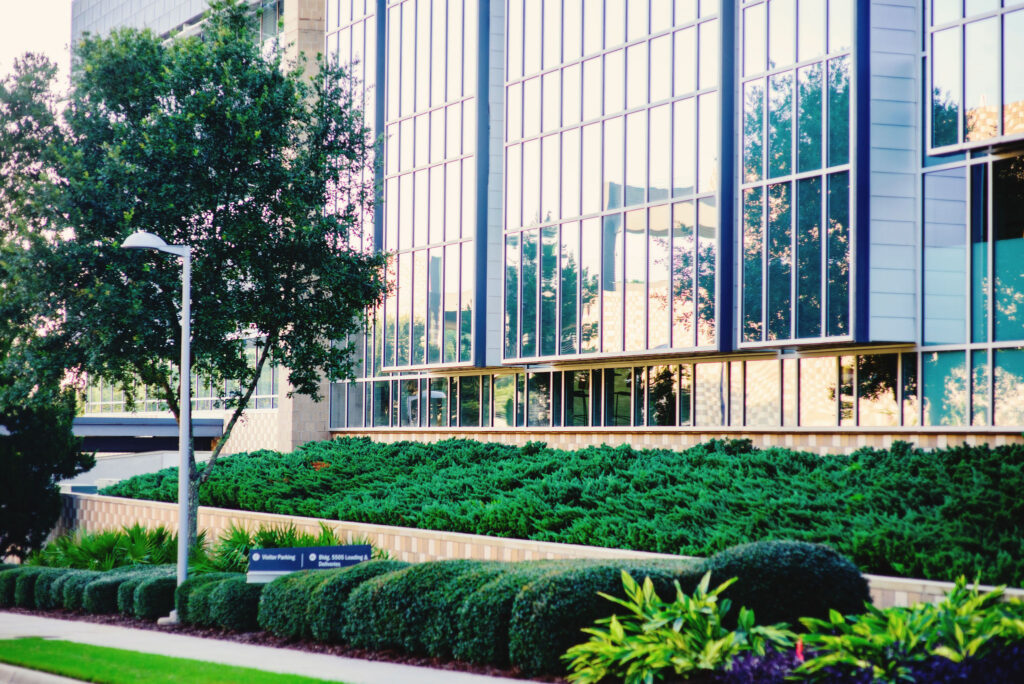
Creating seamless transitions between architecture and landscape begins with reducing barriers between the two. Large window and door openings that eliminate visual and physical obstructions between interior and exterior spaces are an important architectural tool. They result in an interior area that doesn’t feel as confining and offers an invitation to enjoy the outdoor space. The increase in natural light can also reduce energy consumption and provide health benefits.
Material Continuity
With the indoors open to the outdoors, it is important to establish some visual continuity between the two spaces. Using similar materials for both areas can help to create continuity and a vision that feels unified when viewed from either indoors or out. Using the same sustainable wood or stone flooring is often a good tactic to make this a reality. Matching paint palettes also has a large impact.
Living walls, vertical gardens, and potted plants are sophisticated tools for creating seamless transitions between architecture and landscape. They effectively blur the boundary between the built environment and the natural world, bringing a lush, vertical plane of greenery into an entrance or along a courtyard wall. The visual language of the interior is extended out into the landscape and vice-versa. This continuity of texture and color eliminates the jarring threshold effect often felt when stepping through a door. Instead, the eye follows a seamless ribbon of vegetation that softens hard structural lines and mitigates the contrast between artificial and organic elements.
Continuity also applies to furniture, which should be treated as a stylistic continuum rather than two separate sets of decor. By selecting indoor and outdoor collections that share a unified design DNA, such as consistent silhouettes, matching wood species or a synchronized color palette, the interior environment appears to physically spill out onto the terrace.
Utilizing transitional materials, such as woven resins that mimic natural fibers or powder-coated metals that mirror interior hardware, creates a cohesive tactile experience. Arranging furniture in a way that mirrors the interior layout, like aligning an outdoor lounge area directly with an indoor seating group, establishes a clear visual axis. This intentional mirroring ensures that the furniture facilitates a fluid, unobstructed movement between the comfort of the indoors and the openness of the landscape.
Landscaping and Hardscaping
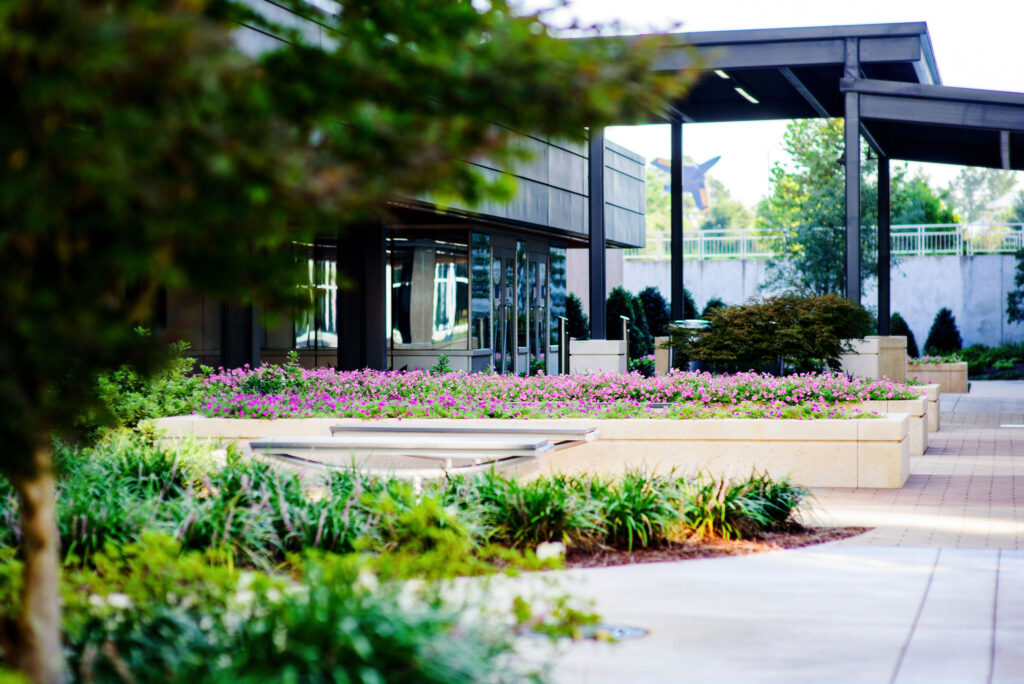
Beyond the patio, landscaping and hardscaping play an important role in creating seamless transitions between architecture and landscape. Hardscape elements like pathways and retaining walls are used to guide the eye out into the landscape as well as to the focal points of the building architecture.
A graceful transition is often created by employing graded naturalization to bridge the gap between a rigid structure and the surrounding wilderness. The planting palette becomes progressively more organic as it moves away from the foundation.
Near the building, structured beds and manicured hedges are used to echo the clean lines and geometry of the architecture to provide a sense of order and intentionality. As the landscape extends toward the natural boundary, these formal arrangements give way to softer, looser groupings of native grasses, perennials, and shrubs. By gradually increasing the density and decreasing the pruning frequency of the plant material, the transition feels like a purposeful evolution rather than a sharp disconnect. It allows a building to appear as though it grew out of its environment.
The use of material echoes and soft hardscaping further stabilizes this relationship. Incorporating local stone, gravel paths, or timber elements that match the home’s siding or masonry helps anchor the built form to the earth. Instead of sharp, 90-degree corners, using sweeping curves and staggered plant heights can mask the foundation line and lead the eye naturally toward the horizon. This approach uses existing woods or meadows for inspiration, integrating the site’s original topography into the garden’s design so that the boundary between the designed space and the found space becomes delightfully indistinguishable.
Achieving Synergy
We may not always be able to put our finger on what makes built architecture flow seamlessly into the natural surroundings, but we know it when we see it. When done right, there is a synergy between architecture and landscape architecture that makes the lines between the two disappear. A sense of harmony is the result.
Creating seamless transitions between architecture and landscape begins with a cooperative philosophy between building designers and landscape architects. At Jerry Pate Design, we value the opportunity to be part of the overall design process to make your indoor and outdoor spaces feel like one cohesive design. Whether it’s incorporating biophilic elements indoors or designing the landscape to flow from the built environment it surrounds, we are here to help.
